
Sleep is your secret weapon - and you're probably ignoring it

TL;DR
Everyone needs an average 7-9 hours of sleep per night for optimal cognitive and physical health
Less than a minimum of 7 hours of sleep leads to deleterious effects such as
Cognitive impairment leading to lack of creative thinking, poor decision making, less emotional control and slower reaction times
Immune system impairment leading to increased likelihood of sickness, dementia and obesity
Increased levels of cortisol coupled with irregular levels of appetite hormones leptin and ghrelin leading to increased hunger and food cravings
For athletes
less than 6 hours of sleep increases injury risk by 50-100%
Decreased time to exhaustion and increased levels of blood lactate at lower thresholds
Even one night of sleep deprivation has decreases in power output
Worse decision making and reaction time
OH THE IRONY
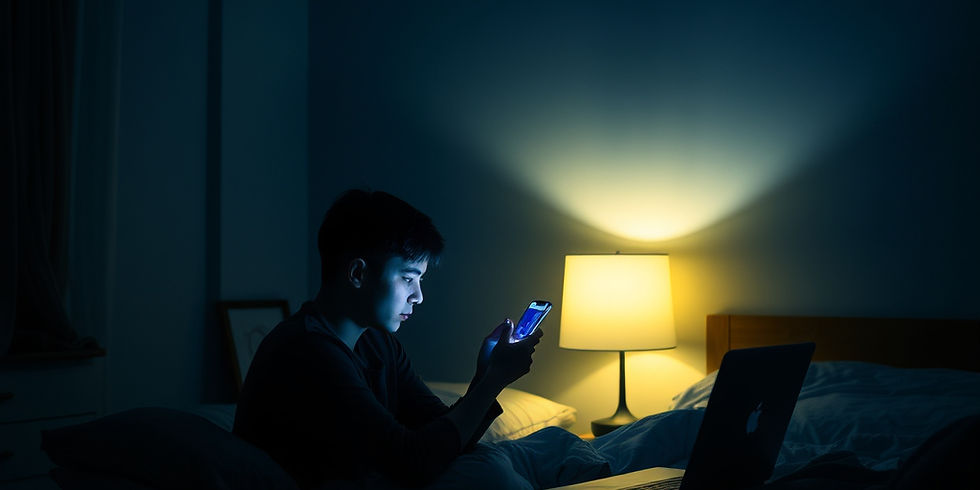
You’re staying up late to get more done, and it’s making you less productive. Here is the irony no one talks about: more assignments, the need to get to the gym, trying to balance mental health, work and life leaves us constantly trying to keep up. As a result, we sleep less to fit it all in. It seems the only area of our lives where we can free up time. This is, in fact, only compounding the problem as sleep deprivation can lead to longer time working, leading to more sleep deprivation. Thus the cycle continues to spiral into decline.

YOU NEED 7-9 HOURS A NIGHT
For all kids and adults to thrive, 7-9 hours of sleep per night is needed with adolescents possibly needing more. Sure, everyone can survive on 5-6 hours of sleep per night, but there is a huge difference between surviving and thriving. Surviving leads to chronic feelings of tiredness, average work and mediocre athletic performance. To be your best you need to sleep your best and a minimum of 7 hours is the way to go.

SLEEP IS A LEARNING ADVANTAGE
Coaches and mentors aren’t pushing sleep enough. We are taught as athletes to spend hours focusing on developing the skills and athletic capabilities needed to succeed in sport. Hours on a field, court, or gym are supposed to translate directly into making better players.
Rudimentary studies have shown that the learning of new physical skills is improved through sufficient sleep leading to up to 18% improvements in speed and efficiency. In fact, sleep has a much more powerful effect on skill development than training alone. All athletes have experienced this effect. When learning a new move with a ball or a new lift in the gym, at first it feels difficult, awkward and sluggish. After a night of sleep, suddenly the movement or skill comes more naturally. Repeat that for days of training and nights of good sleep, and suddenly the skill comes as naturally as breathing.
The amazing thing is this extends beyond just athletics. Learning a new skill like an instrument or coding language on a computer is all influenced and enhanced by adequate sleep. Here, the pattern remains the same. After a night of sleep, suddenly the fingers find the strings on the guitar or piano faster for a chord, or the brain is able to remember the correct line of code with less focus on recall, and you are left happy with the new found ease of which you can enjoy your new hobby.

THE ULTIMATE PERFORMANCE AND RECOVERY ENHANCER
Athletes who are sleep deprived perform less physical work than athletes who are sleep sufficient. Athletes have been shown to have faster times to exhaustion following even one night of bad sleep, unable to sustain high levels of effort for the same times they have achieved in the past. In cyclists, average power output can decrease by 15 watts over a relatively short bout. Tennis players have been shown to serve less accurately. Reaction time decreases. Runners choose to run slower if allowed to run at their own pace for 30 minutes. All of this is likely due to fatigue accumulation in the brain as well as physiological changes in the muscle.
For athletes who sleep enough, they can gain an advantage over those who do not. Levels of perceived exertion decrease as well as the amount of lactate in the blood when compared to sleep deprived athletes. This means athletes who get 7-9 hours of sleep literally feel better and have to work less hard than those who don’t. In cases where athletes have not slept at all for one night, muscle glycogen stores decrease significantly. Since muscle glycogen is a main energy source for muscle, it is no wonder that measures of power also decrease following a night of bad sleep: leaving rested athletes jumping higher, running faster and reacting faster to visual cues when compared to their tired counterparts.
Recovery from exercise is measurably impacted by lack of sleep leaving adaptation to training blunted. In people who are sleep deprived for even one night, markers of muscle protein synthesis can decrease up to 18%. Levels of daily testosterone also decreased by approximately 24%. This can potentially result in a loss of adaptation from training, meaning adequately rested athletes may show up to the field stronger and faster than those who are not, even if the training is the same.

INJURY PREVENTION
In a study done in 112 adolescent athletes, the number one metric that correlated the most with injury was sleep duration. Worst of all, athletes who sleep less than 6 hours per night have been shown to be 50-70% more likely to sustain an injury. If sleeping less than 4 hours, injury is basically all but guaranteed.
Sleep has also been linked to concussion risk. In a study of 190 NCAA athletes, determinants of sleep deprivation such as insomnia (inability to sleep) and daytime sleepiness correlated higher to concussion risk than more talked about factors such as concussion history and sport played. Sleep may also play a critical role in concussion recovery as athletes who sleep less than 7 hours have been shown to have more delayed return to sport times than those with adequate sleep.

LESS THAN 7 HOURS HAS SERIOUS MENTAL SIDE EFFECTS
Your brain’s ability to handle goal oriented behavior, emotional processing, planning, focus and attention span is called executive function. It is controlled by the prefrontal cortex of the brain and is considered one of the most influential abilities that humans have for critical thinking. For athletes, these processes are massively important for real time reactions that influence decision making.
In sleep deprived athletes, executive function has been shown to decline. In healthy adults, sleep deprived groups have been shown to score lower on working memory tasks than those with a full night’s sleep. In another study, participants were tasked with solving increasingly complex problems and it was found that the group with adequate sleep solved more problems than those without enough sleep. Studies have also found that decision making declines under sleep restriction and can even impact the making of moral decisions due to lack of emotional regulation, with sleep deprived individuals more likely to take shortcuts considered amoral to solve problems. Critical thinking is massively important for all field and court based sporting athletes to solve problems in real time, and is clearly limited if sleep is impaired. For athletes such as football and basketball players, this means the potential for forgetting plays from the playbook. For all athletes, losing control of emotions can lead to lashing out after a foul or unfair tackle, putting their team at a disadvantage for the rest of the game.
Even more importantly, chronic sleep deprivation has been linked to mental health disorders such as depression and anxiety, as well as conditions such as dementia and Alzheimer's later in life. It also contributes to obesity and feeling hungry as levels of cortisol increase with levels of hunger hormones such as ghrelin leading to more eating. This is coupled with decreases in the level of the satiety hormone called leptin, leaving you feeling less satisfied even when you do it. Unfortunately, people usually choose less nutrient dense foods with these hormone conditions, opting for the tastier fast foods and candies instead of natural foods like meat, fruits and vegetables.

THE REAL WORLD IMPLICATIONS
The good news is that corporations and education systems are starting to take sleep seriously. Nap pods are beginning to appear in airports around the world. Companies like Google and Nike are teaching employees the importance of sleep on work quality and productivity. Even a few states have issued blanket laws to mandate later start times for schools.
In research done across a few different states and a few different surrounding counties, it was found that students of schools that start later are less likely to be involved in car crashes or other motor vehicle accidents. In one county, motor vehicle accidents decreased by 65% in high school students. Given accidental deaths and car crashes are the number one cause of death in high school aged individuals, adequate sleep could be the answer to literally help save lives.
For students of schools with later start times, measures of mental health also seem to improve. Students exhibited less symptoms of depression and anxiety likely due to the increase in sleep as a result of later waking time. Since adolescent individuals have a circadian rhythm that is pushed later in the day (they want to fall asleep later and wake later the next morning), later school start times help align with the natural rhythms of their brain.

SLEEP IS THE SECRET TO YOUR SUCCESS
You can’t out-train poor sleep. You can’t out-supplement it. And you definitely can’t ignore it without consequences. Regardless of your arena, sleep is a super power and one most people and young athletes are not using enough. Start tonight and schedule some sleep since it is the most important thing you will do all day.
Sources
Charest, J., & Grandner, M. A. “Sleep and athletic performance: Impacts on physical performance, mental performance, injury risk and recovery, and mental health”. Sleep Medicine Clinics, vol. 15, no. 1, 2020, pp. 41–57. https://doi.org/10.1016/j.jsmc.2019.11.005
D., et al. “The Effect of Acute Sleep Deprivation on Skeletal Muscle Protein Synthesis and the Hormonal Environment.” Physiological Reports, vol. 9, 2021, article e14660. https://doi.org/10.14814/phy2.14660
Fucci, Davide, et al. “Need for Sleep: The Impact of a Night of Sleep Deprivation on Novice Developers’ Performance.” arXiv, 2018. https://arxiv.org/abs/1805.02544
Liu, Y., et al. “Implications of Sleep Loss or Sleep Deprivation on Muscle Strength: A Systematic Review.” Sports Medicine, 2025. PubMed, https://pubmed.ncbi.nlm.nih.gov/40663194
Milewski MD, et al. “Chronic Lack of Sleep Is Associated with Increased Sports Injuries in Adolescent Athletes.” Journal of Pediatric Orthopaedics, vol. 34, no. 2, 2014, pp. 129–133. https://doi.org/10.1097/BPO.0000000000000151
Saner, Nicholas J., et al.
“The Effect of Sleep Restriction, with or without High-Intensity Interval Exercise, on Myofibrillar Protein Synthesis in Healthy Young Men.” Journal of Physiology, vol. 598, no. 8, 2020, pp. 1523–1536. https://doi.org/10.1113/JP278828
Sen, Aayushi, and Xin You Tai. “Sleep Duration and Executive Function in Adults.” Current Neurology and Neuroscience Reports, vol. 23, 2023, pp. 801–813. https://doi.org/10.1007/s11910-023-01309-8
Skein, Melissa, et al. “Intermittent-Sprint Performance and Muscle Glycogen after 30 h of Sleep Deprivation.” Medicine & Science in Sports & Exercise, vol. 43, no. 7, 2011, pp. 1301–1311. https://doi.org/10.1249/MSS.0b013e31820d4d5b
Trofa, David P., et al. “Increasing Burden of Youth Baseball Elbow Injuries in US Emergency Departments.” Orthopaedic Journal of Sports Medicine, vol. 7, no. 5, 2019, p. 2325967119845636. https://doi.org/10.1177/2325967119845636
Walker, Matthew. “Why We Sleep: Unlocking the Power of Sleep and Dreams”. Scribner, 2017
Walker, Matthew P., et al. “Sleep and the Time Course of Motor Skill Learning.” Neuron, vol. 35, no. 1, 2003, pp. 205–211. https://pmc.ncbi.nlm.nih.gov/articles/PMC202318/
Wheaton, Anne G., Daniel P. Chapman, and Janet B. Croft. “School Start Times, Sleep, Behavioral, Health, and Academic Outcomes: A Review of the Literature.” Journal of School Health, vol. 86, no. 5, 2016, pp. 363–381. https://doi.org/10.1111/josh.12388
Zimmerman, Molly E., and Marie-Pierre St-Onge. “The Effects of Insufficient Sleep and Adequate Sleep on Cognitive Function in Healthy Adults.” Sleep Health, 2024. https://pmc.ncbi.nlm.nih.gov/articles/PMC11045317/
Comments